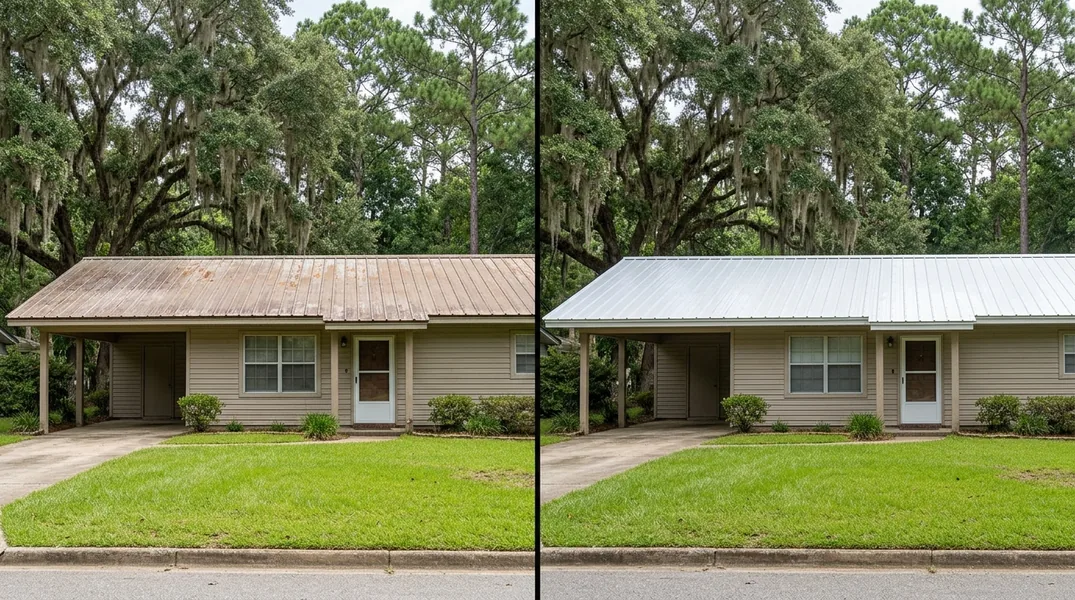
Why Wind Uplift Ratings Matter for Tallahassee Homeowners
If you live in Tallahassee, you already know that hurricane season is not just a coastal concern. Inland storms can bring sustained winds well over 100 mph, and the roof is the first line of defense. Wind uplift rating is the measure of how much negative pressure (suction) a roof assembly can withstand before panels or shingles peel away. For a metal roof hurricane scenario, this rating is the single most important number on the product label.
Most homeowners focus on impact resistance from debris, but uplift is what actually causes catastrophic roof failure. When wind flows over a roof, it creates lift similar to an airplane wing. If the fasteners, panels, and underlayment are not rated for the local wind speed, the entire system can fail in minutes. Understanding these ratings helps you ask the right questions and avoid a contractor who promises a bargain roof that cannot handle North Florida weather.
How Wind Uplift Ratings Are Measured and What the Numbers Mean
Wind uplift ratings are expressed in pounds per square foot (psf) and are determined through standardized testing, typically ASTM E330 or UL 580. A higher psf number means the roof assembly resisted greater suction before permanent deformation or failure. For example, a roof rated at 55 psf is suitable for moderate wind zones, while ratings of 90 psf or higher are often required in high-velocity hurricane zones. In Florida, the Florida Building Code sets minimum requirements based on wind speed maps, and local building officials enforce them.
Metal roof wind resistance also depends on panel profile, gauge, clip spacing, and fastener type. A standing seam roof with concealed clips generally outperforms exposed-fastener panels because there are no penetrations for wind to exploit. However, even the best panel fails if it is installed with the wrong clip spacing or inadequate edge metal. That is why the rating applies to the entire assembly, not just the metal sheet. When you request a free estimate, ask for the specific uplift rating and the testing documentation for the system being proposed.
Florida Building Code Roof Requirements and Wind-Borne Debris Regions
The Florida Building Code roof section is strict for a reason. It divides the state into wind-borne debris regions and sets design wind speeds that vary by county. Leon County, where Tallahassee sits, falls into a region that requires roofs to resist some of the highest inland wind speeds in the country. Metal roofs must meet both uplift and impact criteria, and the fasteners must be corrosion-resistant for the humid climate. A reputable installer will pull the correct permits and ensure the installation matches the approved product approval numbers.
One common mistake is assuming that any metal roof sold in Florida is automatically compliant. Product approval is system-specific: the panel, clip, fastener, and substrate must be tested together. If a contractor substitutes a different fastener or skips the underlayment specified in the approval, the rating is void. For homeowners in Bradfordville and Woodville, this matters because insurance discounts and code compliance both depend on a properly documented installation. Always verify that the permit inspection passes before making the final payment.
Standing Seam vs. Exposed Fastener: Which Handles Hurricane Winds Better?
Standing Seam Metal Roofing is the gold standard for wind uplift because the panels are attached with concealed clips that allow for thermal movement while maintaining a continuous lock. There are no exposed screws to back out or washers to deteriorate, which is critical when wind-driven rain and debris hammer the roof. A properly installed standing seam system can achieve uplift ratings well above code minimums, giving homeowners peace of mind during a metal roof hurricane event.
Exposed-fastener panels (often called screw-down panels) are more affordable and still perform well when installed correctly, but they rely on hundreds of screws and neoprene washers. Over time, UV exposure and heat can degrade the washers, and wind can loosen fasteners. For a Metal Roof Installation in a high-wind area, standing seam is usually the better long-term investment. If budget is a concern, ask about a hybrid approach or a Metal Roof Over Shingles (Retrofit), which can sometimes improve uplift resistance by adding a structural layer without a full tear-off.
Metal Roof Replacement Near Me: When to Upgrade for Better Wind Resistance
If your current asphalt shingle roof is nearing the end of its life, hurricane season is the wrong time to discover that it does not meet current wind uplift standards. Older homes in Chaires and throughout the region often have roofs that were built to outdated codes. A Metal Roof Replacement not only improves curb appeal but can significantly increase the wind uplift rating of the entire structure. Many insurers offer premium discounts for verified metal roof installations, which can offset part of the upfront pricing over time.
When you search for a metal roof replacement near me, look for a contractor who explains the uplift rating in plain language and provides a written specification. Ask about clip spacing, panel gauge, and whether the system has a current Florida product approval. A good installer will also inspect the roof deck and framing because the strongest panel cannot compensate for weak attachments. At Tallahassee Metal Roofing, we walk you through the ratings and help you choose a system that meets or exceeds code for your specific address.
Questions to Ask Before You Hire a Metal Roofing Contractor
Before you sign a contract, ask three direct questions: What is the wind uplift rating of the proposed assembly, and can you show me the test report? Will you pull the permit and schedule the inspection? And what is the warranty coverage for fasteners and finish? A contractor who hesitates on any of these is not the right choice for hurricane country. The difference between a 55 psf and a 90 psf system can be the difference between a roof that survives and one that ends up in your neighbor's yard.
Also ask about the installation crew. Manufacturer certifications and factory training matter because wind uplift performance depends on precise clip placement and fastener torque. If you want a straightforward conversation about your options, call Tallahassee Metal Roofing at (850) 404-0887. We serve homeowners across the area and are happy to provide a free estimate with clear, code-compliant specifications for your home.
Looking for a professional metal roofing contractor in Tallahassee? Tallahassee Metal Roofing responds fast for all your metal roofing needs.
Get a Free QuoteOur services: Metal Roof Installation · Standing Seam Metal Roofing · Metal Roof Replacement